Open Today Sales: 9 AM-8 PMOpen Today Service: 7 AM-6 PM






 Picking out the right set of tires for your vehicle is a little different from buying a pair of sneakers. While your shoe size might be represented by a single digit, tire sizes are as long as phone numbers. Every one of those letters and numbers conveys a piece of information.
If you’re curious about how to read tire size, you’re in the right place. McDonald Volkswagen has put together this handy guide for our neighbors around Littleton, Parker, and Castle Rock, CO. Read on, and you’ll soon be able to translate tire sizes for all of your family and friends.
To find out what tires fit your specific vehicle, check your owner’s manual. There’s probably a range of sizes given, because different tires suit different types of driving.
If you need to figure out what size tires currently sit on your car, take a look at the side of the tire. A serial number is built into the tire’s rubber. It’s around 12 digits long and contains both letters and numerals.
So, how do you read that tire size? Let’s break it down, piece by piece.
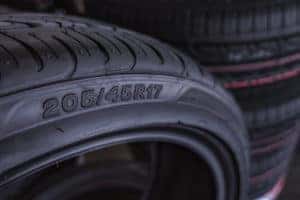 One Letter: Tire Type
Most Volkswagen vehicles will have tires sizes that begin with the same letter: P. That stands for “passenger vehicle.” From compact cars to minivans, P is the most common type. Other common tire types include LT (light truck tire) and ST (special trailer).
Three digits follow the tire type. This part of the size is a direct measurement of the tire’s width in millimeters. There’s a fair amount of variation between different sizes of vehicle, but the most common widths are around 200 millimeters. For reference, that’s approximately eight inches.
After the tire width, you’ll see a slash and then a 2-digit number. This part of the tire size communicates how large the tire’s sidewall is compared to the width. It’s written as a percentage. For example, 200/70 would communicate that the tire’s sidewall was 70% as long as the 200-millimeter tire.
You’ll need a tire to fall within the appropriate range of both width and aspect ratio to fit securely onto any vehicle’s wheel.
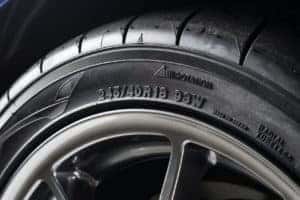 One Letter: Construction Type
This letter tells you what’s going on inside the tire. Most modern vehicles recommend use of radial tires, signified by the letter R. Layers of metal, rubber, and synthetic cords are beneath the tire’s visible surface.
With this part of reading tire size, we’re back to measurements. The wheel diameter gives the distance between the two inner sides of the tire, so that you know how large a wheel it could contain. Unlike the width, the diameter is measured in inches.
The load index refers to a chart that calculates how much weight the tire can handle. When you combine the load-carrying capability of your four tires, you can see how much weight they could theoretically bear—your vehicle, plus any potential cargo and passengers.
Passenger cars tend to have individual load indexes that range from 70 to 110. Those correspond to each tire being able to bear 739 to 2337 pounds.
 The Final Letter: Speed Rating
With some exceptions, the speed rating is a single letter. It refers to a chart that shows the maximum speed that the tire is designed to handle. The later the letter is in the alphabet, the higher a speed the tire tolerates.
General use tires tend to have a speed rating ranging from S to V. Those permit maximum speeds of 112 to 149 miles per hour. It’s nice to know how capable our tires are, but remember to follow posted speed limits!
When you have questions about tires and other aspects of automotive service, think of McDonald Volkswagen. We’re proud to supply sturdy tires of all sizes to the drivers of Littleton, Parker, and Castle Rock, Colorado. Visit the service center at our dealership today to find the tire size that’s right for your car!